By the ARealMe Team
Some of our tests come and go. Two of them never left.
What Career Should I Have? went online in 2014. What Should I Major In? followed in 2016. Year after year, people come to them at the same moments: before choosing what to study, before a first job, and when a job no longer fits. The career test alone has collected more than 15,000 star ratings and is available in 34 languages. The major quiz speaks 16.
They were also starting to show their age. So this month both got the largest update in their history.
The word cloud stays
Let’s get this one out of the way first, because it is the part of the career test people are fondest of.
When you finish the career test, you do not get one job title and a goodbye. You get a cloud of careers that suit you, big ones and small ones. We were never going to take that away.
What we did was rebuild it. The cloud is now part of your result card, it is sharp on every screen, and it shows up in the picture when you share or save your result. The old one reshuffled itself every time you looked. The new one is yours: same answers, same cloud.
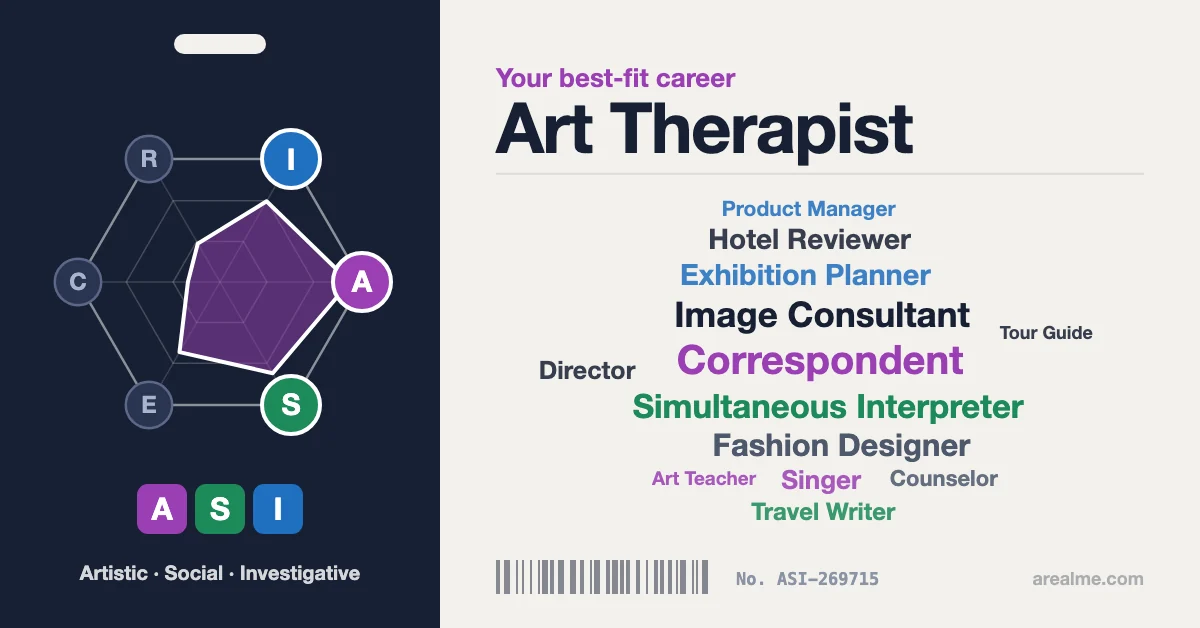
An example result. Yours will look different.
You finally get your Holland code
Both tests have always been built on the same idea: psychologist John Holland’s six interest types. Realistic, Investigative, Artistic, Social, Enterprising, Conventional. Career counselors have used them for decades, and the three you score highest on make up your Holland code.
For twelve years we used that code quietly, behind the scenes, to pick your result. Now we show it to you. Your card has the six types on Holland’s hexagon with your own shape drawn inside it, and under the card you can open each type to see your score, what it says about you, and the kind of work that goes with it.
It is the same test underneath. You just get to see how it thinks.
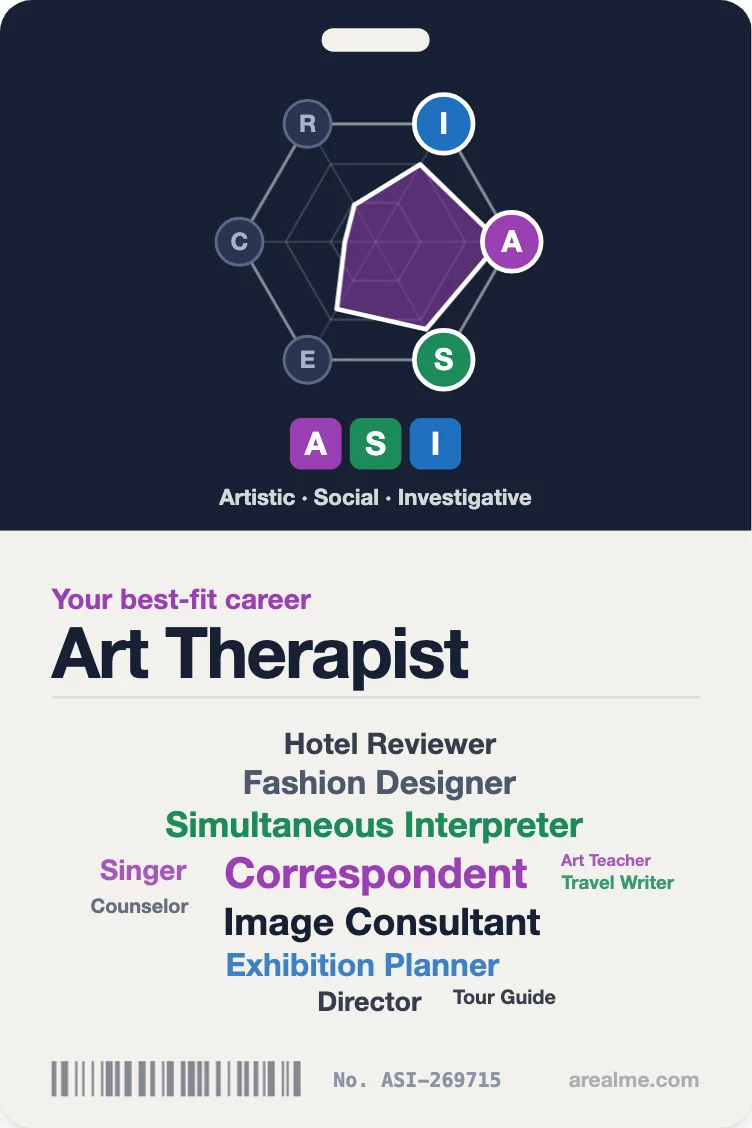
A student ID for your major
The major quiz got its own look. Your result arrives as a student ID: your major, a “dream campus” that is well known for it, your Holland code, and a graduating class four years from today.
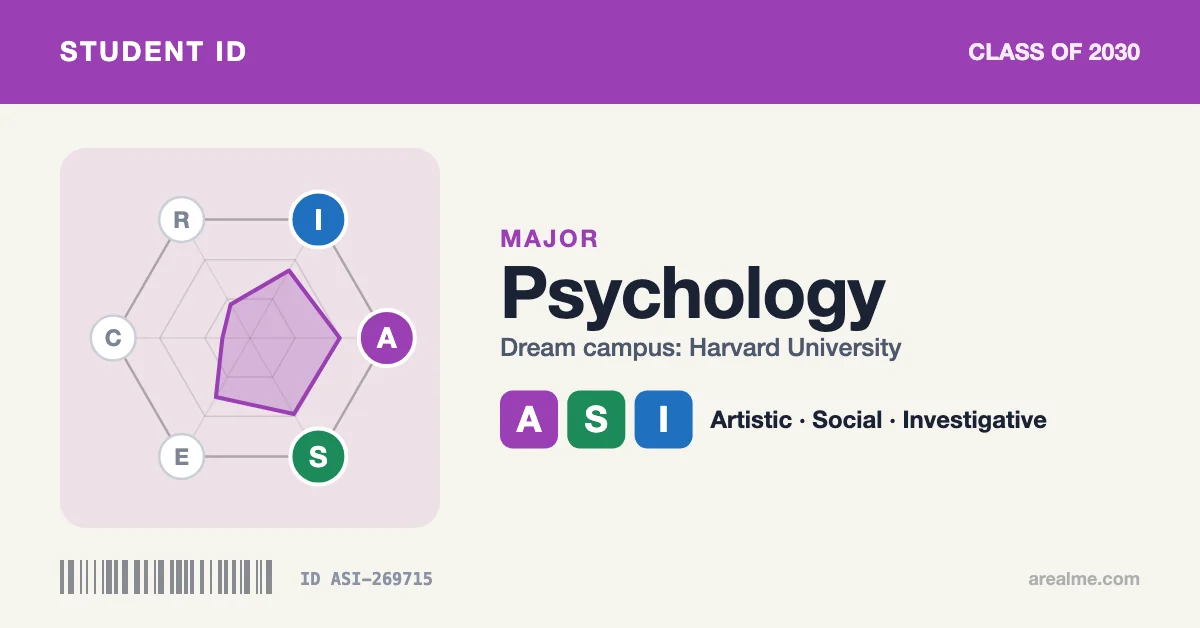
While we were in there, we went through the list of majors and universities line by line. A few entries had been wrong for years (no, Harvard does not teach jewelry design), some were not really majors at all, and several schools were paired with fields they are not especially known for. Every pairing has been checked and corrected, in every language the quiz speaks.
One more thing about that campus: it is an example to make the result feel real, not a ranking and not advice on where to apply.
We stopped asking for your gender
Both tests used to open with “Which gender are you?”, and for a handful of results the answer changed what you got. One person would be told carpenter, another baker, for the very same answers.
That question is gone. Your result now depends on what you like doing and nothing else. We also retired some job titles that had not aged well and replaced them with ones you would actually find in a job listing.
Where to go after the quiz
A quiz is a starting point. Thirty questions cannot know your grades, your budget or the job market where you live, and we say so on the page.
So both tests now end with places to keep going: the U.S. Department of Labor’s O*NET Interest Profiler if you want a longer assessment, the Occupational Outlook Handbook for pay and job prospects, and College Scorecard and College Navigator for comparing schools and programs. They are free, official, and far more detailed than we could ever be. There is also a short FAQ on each page about what a Holland code is and how much weight to give it.
Try it again
If you took one of these years ago, take it again. People change, and it only takes a few minutes.
And if the cloud gives you something unexpected, tell us. That is still our favorite kind of message.







Comments could not be loaded. Check your connection and try again.