In the past, our team often rolled out new quizzes, reaction benchmarks, and personality assessments quietly behind the scenes. We updated the site, monitored performance, and let players stumble upon new releases on their own.
Moving forward, we want to be much more transparent about what we build and why. When we design a new quiz, tune a reflex measurement, or map out a psychological framework, there is a lot of research, writing, and testing that goes into it. Sharing those background notes helps you get more out of every result.
Over August and September, we launched six brand-new tests on AREALME. They span three popular areas: an audio-only reflex benchmark, three multi-dimensional fandom personality quizzes, and two deep psychometric self-reflection profiles.
Here is a quick tour of each new test, how it works, and where you can try it today.
1. Auditory Reaction Time Test: How Fast Do You Respond to Sound?
Most online reflex challenges test your visual reaction time - you wait for a red box to turn green, then click as fast as possible. But how fast do you react when there is nothing to see?
The Auditory Reaction Time Test measures your simple reaction speed to pure sound. Research shows that sound signals reach the human brain faster than light signals, traveling along auditory pathways in just a few milliseconds. However, testing hearing response online is tricky because hardware latency, volume levels, and anticipation can distort the numbers.
We built several protections into this test to make sure your results are genuine:
- Built-in tone preview and volume check: You calibrate your volume before starting so the sound is crisp, comfortable, and unmistakable.
- Audio-only stimulus: The screen does not blink or change color when the tone plays. You must rely solely on your ears.
- Anticipation filters: Taps faster than 100 ms are flagged as false starts, while responses taking longer than 1,000 ms prompt a retry.
- Contextual research baseline: Your final score is compared against a large published online sample of 7,081 adults (mean response: 241 ± 47 ms).
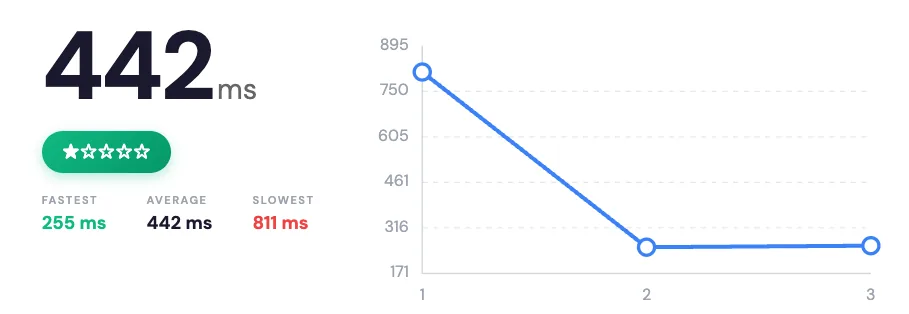
Your result includes an average reaction time, your fastest and slowest round, a star rating, and a round-by-round consistency chart.
- Best for: Gamers, musicians, athletes, and anyone curious about their sensory processing speed.
- Try the test: Auditory Reaction Time Test
2. Percy Jackson Cabin Quiz: Find Your Camp Half-Blood Home
Rick Riordan’s Camp Half-Blood gave young demigods a place where their strangest instincts finally made sense. But if a magical trident or laurel wreath appeared over your head today, where would you actually stay?
The Percy Jackson Cabin Quiz moves past trivia and book memory. Instead of asking you to name your favorite Greek god or pick a magical weapon, it places you in 18 everyday camp dilemmas. How do you lead a disorganized team? What do you do when a friend takes an unnecessary risk? How do you handle conflict with someone you respect?

Key highlights of this quiz include:
- 18 complete cabin profiles: Covers the major Olympian cabins as well as minor deities including Hades, Iris, Hypnos, Nemesis, Nike, Hebe, Tyche, and Hecate (Hera and Artemis are excluded from demigod parentage to follow the lore).
- Interactive Cabin Fit breakdown: Powered by our new match comparison system, your answers generate a five-trait profile. You can see your closest cabin and click through the other 17 cabins to see your relative fit for each.
- No prior lore needed: Newcomers to the books and TV series can answer naturally, while long-time readers will appreciate the camp atmosphere.
Find out which cabin door opens for you after a long day in the woods.
- Best for: Fantasy readers, mythology enthusiasts, and fans of the books and Disney+ series.
- Try the test: Percy Jackson Cabin Quiz
3. Which KATSEYE Member Are You?
Since their debut through The Debut: Dream Academy and the hit Netflix docuseries Pop Star Academy: KATSEYE, the global girl group KATSEYE has captured international attention with their high-energy choreography, vocal harmonies, and distinct individual styles.
The Which KATSEYE Member Are You? Quiz invites you to step into the shoes of a global performer across 14 pop-star scenarios.

Rather than testing member trivia or favorite lyrics, the quiz looks at how you work, create, and recharge:
- Six authentic member archetypes: Match with Manon (relaxed independence and personal rhythm), Sophia (attentive leadership and dependable warmth), Daniela (boundless energy and dynamic execution), Lara (creative ambition and bold artistic vision), Megan (playful curiosity paired with disciplined follow-through), or Yoonchae (quiet observation and steady, resilient growth).
- Nuanced question formats: Includes tap-to-rank preference questions and select-all scenarios alongside classic multiple-choice prompts.
- Full roster exploration: Browse the profiles of all six members after receiving your result to see how your strengths compare with your bias.
Whether you have followed every trainee mission or just discovered their music on your playlist, see whose creative energy matches your own.
- Best for: K-pop fans, pop culture lovers, and anyone who enjoys creative teamwork.
- Try the test: Which KATSEYE Member Are You?
4. Which Amazing Digital Circus Character Are You?
Few indie animation projects have exploded quite like The Amazing Digital Circus (TADC), created by Gooseworx and produced by GLITCH Productions. The show’s mix of surreal humor, uncanny digital entrapment, and deeply human emotional struggles struck an instant chord with millions of viewers.
The Which Amazing Digital Circus Character Are You? Quiz drops you straight into the circus tent with 12 scenario-based questions.

How do you react when the world turns strange and unpredictable?
- Seven possible character matches: Discover whether your instincts align with Pomni (anxious vigilance combined with heartfelt loyalty), Caine (extravagant showmanship and a desire to orchestrate fun), Jax (detached sarcasm and protective emotional distance), Ragatha (patient empathy and keeping the peace), Gangle (fragile sensitivity searching for a safe outlet), Zooble (uncompromising independence and firm boundaries), or Kinger (erratic on the surface, surprisingly grounding in a crisis).
- Focus on psychological coping: Questions explore how you deal with sudden chaos, solve puzzles, comfort overwhelmed friends, and protect personal boundaries.
- Interactive ranking: Features custom preference rankings that capture your instinctive reactions to circus adventures.
(Note: The detailed character results discuss character backstories and developments, so take a look after catching up on the episodes if you want to avoid minor spoilers!)
- Best for: Indie animation fans, TADC viewers, and anyone who appreciates offbeat psychological humor.
- Try the test: Which Amazing Digital Circus Character Are You?
5. Imposter Syndrome Test: Do You Give Yourself Credit for Your Success?
Have you ever earned a promotion, passed an important milestone, or received praise, only to feel like a total fraud? Did you whisper to yourself that you only got lucky, or worry that everyone will soon realize you have no idea what you are doing?
You are not alone. That persistent gap between real accomplishments and inner self-worth is known as imposter syndrome (or the impostor phenomenon).
The Imposter Syndrome Test is a structured self-reflection tool grounded in research from clinical and organizational psychology. It does not give you a shallow “yes or no” verdict. Instead, it examines how self-doubt shows up across five distinct behavioral dimensions.
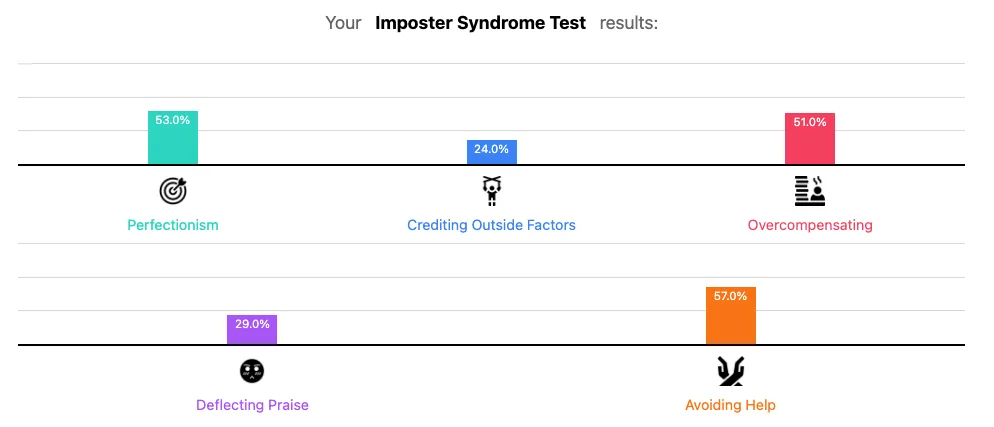
Your result breakdown highlights:
- Perfectionism: Holding yourself to unrealistic standards and treating any small mistake as evidence of failure.
- Crediting Outside Factors: Attributing achievements to luck, timing, or easy tasks rather than personal capability.
- Overcompensating: Working excessive hours or over-preparing to quiet the anxiety of falling short.
- Deflecting Praise: Feeling uncomfortable with compliments and brushing off positive recognition.
- Avoiding Help: Believing that asking for guidance or sharing the workload is an admission of weakness.
Each report includes relatable character illustrations, clear scoring guidance, and practical suggestions for separating internal feelings from objective facts. It is designed to help you notice unhelpful mental habits and give yourself the credit you have genuinely earned.
- Best for: Professionals, students, creators, and high achievers navigating career changes or self-doubt.
- Try the test: Imposter Syndrome Test
6. Highly Sensitive Person (HSP) Test: Map Your Sensory and Emotional Radar
About 15% to 20% of the population possesses a finely tuned nervous system that takes in more environmental information and processes it more deeply than average. First identified by psychologist Dr. Elaine Aron, this innate trait is known as Sensory Processing Sensitivity (SPS), or being a Highly Sensitive Person (HSP).
High sensitivity is neither a disorder nor a character flaw. It is a biological difference with significant evolutionary strengths - such as heightened empathy, keen pattern detection, and aesthetic nuance - as well as real vulnerabilities to sensory fatigue and social burnout.
The Highly Sensitive Person Test is built on Dr. Aron’s DOES framework (Depth of processing, Overstimulation, Emotional empathy, and Subtlety detection). Through 30 thoughtful scenario questions, it maps your sensitivity across eight core dimensions.
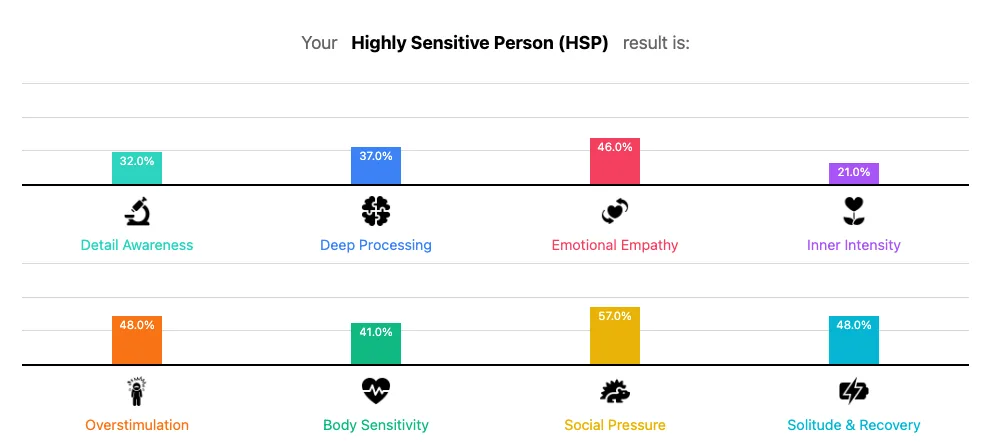
Rather than labeling you simply “sensitive” or “not sensitive,” your visual bar chart illustrates:
- Detail Awareness: How keenly you catch small physical nuances in light, sound, texture, and layout.
- Deep Processing: How instinctively your brain analyzes, connects, and reflects on experiences.
- Emotional Empathy: How readily you absorb and resonate with the moods of people around you.
- Inner Intensity: The vividness and depth of your private emotional life, imagination, and response to art.
- Overstimulation: How quickly crowded, noisy, or chaotic environments drain your cognitive bandwidth.
- Body Sensitivity: How sharply your nervous system responds to hunger, lack of sleep, caffeine, and pain.
- Social Pressure: Your sensitivity to conflict, observation, performance scrutiny, and difficult boundaries.
- Solitude & Recovery: How essential quiet, uninterrupted alone time is for recharging your battery.
Knowing your specific spikes allows you to protect your energy where it matters most, manage overstimulation before it peaks, and embrace your sensitivity as an asset rather than an obstacle.
- Best for: Anyone who feels easily overwhelmed by noisy environments, deep thinkers, empaths, and those seeking clearer self-care boundaries.
- Try the test: Highly Sensitive Person Test
What Should We Build Next?
From measuring your raw auditory reflexes in milliseconds to exploring Camp Half-Blood cabins, pop-star ambitions, digital circus escapades, and deep psychological traits, these six tests reflect what we love doing most: creating thoughtful, interactive experiences that help you learn a little more about yourself and have fun doing it.
Take a few minutes to explore the tests that catch your eye, compare notes with friends, and let us know what kinds of quizzes or reflex tools you would like to see next.












Comments could not be loaded. Check your connection and try again.